
MYC amplification associated with pancreatic tumor subtype and immune activity
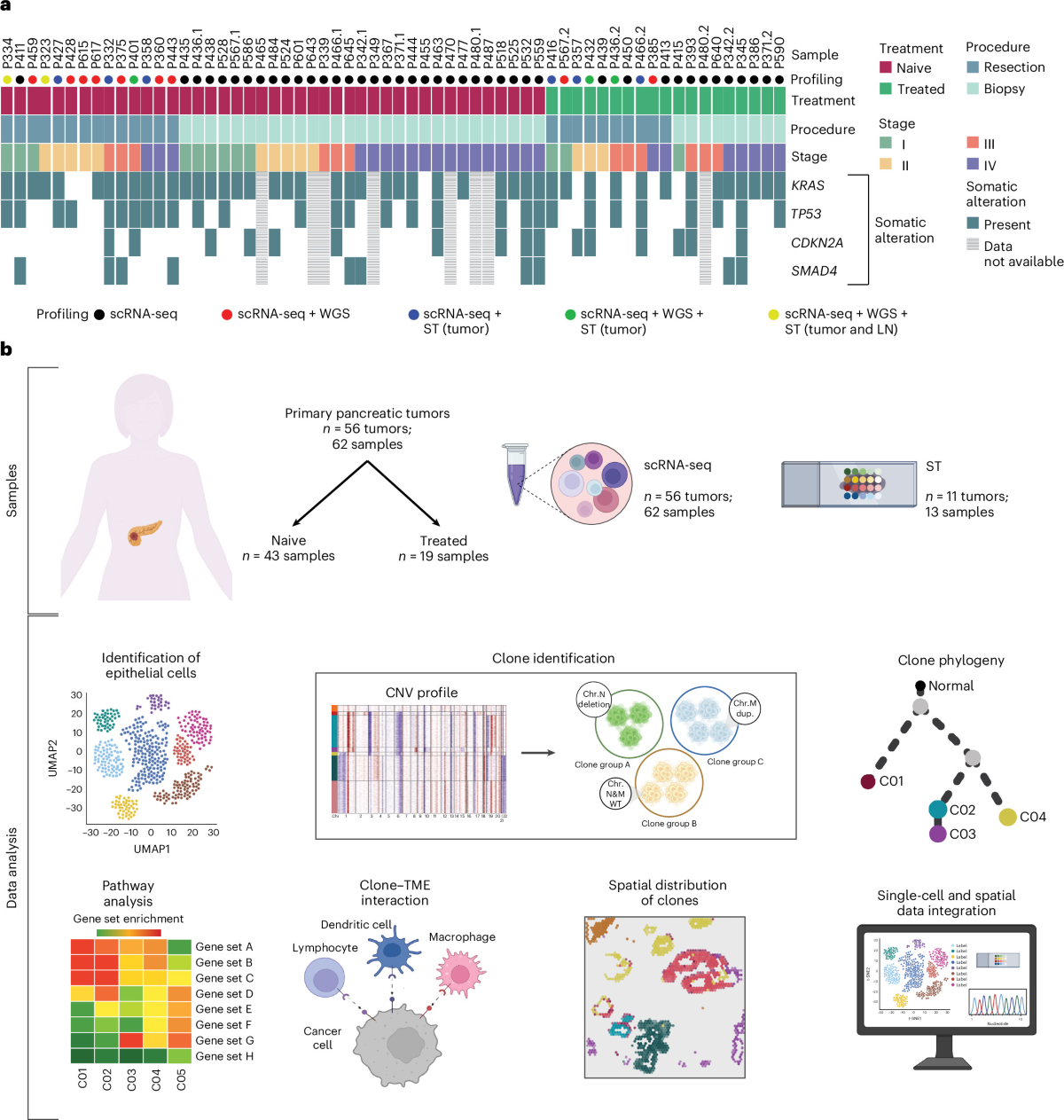
A Nature Genetics study, DOI 10.1038/s41588-026-02779-5, examined pancreatic ductal adenocarcinoma, an aggressive cancer, cell by cell. Single-cell RNA sequencing measured gene activity cell by cell in 443,451 cells from 62 primary tumors, while spatial transcriptomics mapped gene activity across tissue in 53,236 spots from 11 tumors; tumors frequently contained genetically distinct cell groups. Extra copies of the cancer-related MYC gene region were recurrently associated with a shift from classical to basal-like gene activity, two tumor subtypes with different prognoses, and with weaker interferon and other immune-response programs. Laboratory experiments reducing MYC activity in mouse and primary human PDAC models reactivated classical gene activity and immune-response pathways.
Different cell groups used distinct communication signals that may help explain why groups with complementary features occupied the same tissue regions.
Written by the Genomes desk from the primary source cited and linked above and checked against it. Research use only; not medical advice. Corrections: editor@genome.news.